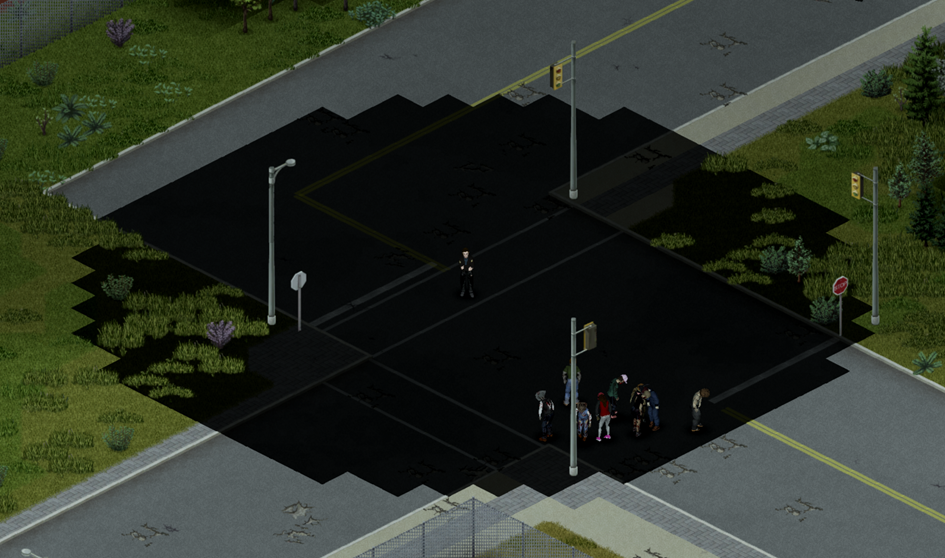
You must know how far you can go in combat; sometimes, being on the offensive is a death sentence.
⛓️💥 Disengaging
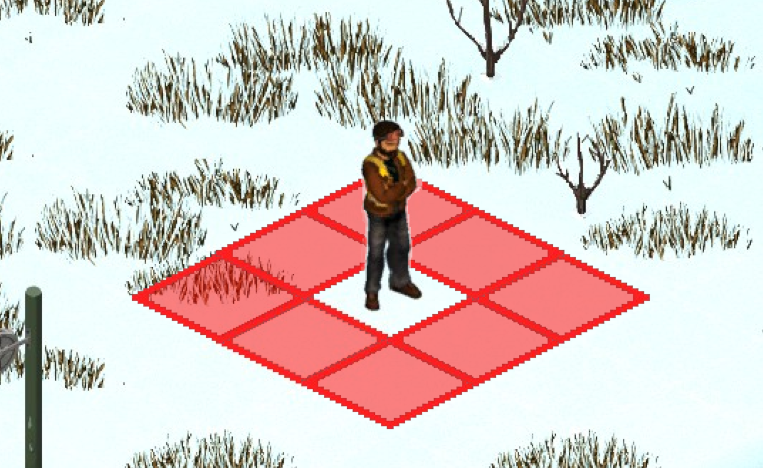
Never turn your back on a Spearwall.
Stepping out of a Spearwall fighter's reach on your turn triggers an attack of opportunity. To prevent this, use your action to disengage.
Press Disengage on your turn, before you move.
Describe with a /meloud how you disengage. No dice are rolled.
Move away. No attacks of opportunity are triggered this turn.
Press Finish turn.
One Disengage covers every opponent next to you.
If you disengage, you may not take any other action this turn.
🥷 Taking cover
Cover helps against being targeted by ranged weapons.
Cover is no longer considered an action: instead, it's a status condition. It does not make you immune to damage. It gives a small defensive bonus because you are harder to hit with a ranged weapon.
Press In cover when you're behind cover, and press it again when you leave it.
While in cover you get +2 Defend (ranged) against guns, crossbows, thrown weapons and explosives.
Cover gives no bonus against melee attacks or attacks of opportunity.
Valid cover: tables, cars and other vehicles, sofas, doors, dumpsters, rubble, corpses, or the corner of a wall. The object must be reasonably sized and partly block your opponent's line of sight.
Invalid cover: other characters, a small plant, a wooden chair, a mailbox, anything you take out of your inventory and put down.
🩹 First aid
Patching someone up in the middle of a fight.
First aid is an action on your turn. It treats burning and poison; it does not restore HP.
Select the character you want to treat in the turn order, or select nobody to treat yourself. They must be within 1 tile (diagonals included). Knocked-out and surrendered characters can be treated.
Press First aid. You roll d20 + half your First Aid skill level (rounded down) + modifiers: the First Aid trait (+1), Sawbones (+2), and -2 if you are poisoned yourself.
On 12 or higher, one status is removed: burning first, otherwise poison.
Your turn ends, whether it works or not.
0-1: +0
2-3: +1
4-5: +2
6-7: +3
8-9: +4
10: +5
The button shows who you are treating: First aid: (name), or First aid: self when nobody is selected.
The combat log shows every part of the roll, for example 16 [+2 First Aid skill] vs 12 - the fire is put out.
The system refuses the attempt if the character is neither burning nor poisoned, or is out of reach. A refused attempt does not cost your turn.
Outside combat, First aid is a normal roll that uses the same formula (d20 + half your First Aid skill level + modifiers).
💨 Escaping
Not every encounter is winnable. Sometimes you have to cut your losses and try to escape.
Escaping requirements
To escape you must meet both requirements:
You must be physically capable of fleeing.
You cannot escape if you are bound, severely injured in a way that affects your movement, or being grappled.
You also cannot escape if the only route out leads directly past an attacker.
You must be somewhere escape is realistically possible.
Possible: a street, an open field, a room with an unblocked door.
Impossible: a locked room, an alley with the exit blocked, a vehicle trapped at a roadblock with no way forward.
The system blocks the Escape button while you are Grappled or have Escape-preventing wounds
Escaping before combat starts
A player may try to flee before PvP combat is initiated, as long as they meet all escape requirements.
If you spot your enemy from further away than /say range, you may leave mechanically without emoting your escape.
If you are both close enough for normal conversation (within /say range), follow these steps:
Type a /meloud that clearly describes how you flee (running away, driving off, climbing through a window, and so on). Everyone at the scene freezes in place.
The potential attacker must then decide either to respond with a PvP initiation or to let you escape.
If combat is initiated, the First Round begins (see Basics guide → Dice Combat Rounds), and the attacker goes first.
Escaping during combat
Before trying to escape once combat has started, make sure you meet both requirements, and remember:
You can only try to escape on your own turn.
Escape before moving any tiles. If you have moved, you may not try to escape.
You cannot escape after Disengaging this turn; the system blocks it.
Escape roll
Press Escape. It is a flat d20 roll, and distance makes no difference. To succeed, the result must be 18 or higher.
What changes the roll:
Slippery: +2
Poisoned: -2
Outcomes
Success: you are removed from the combat and must leave the scene. You cannot stick around to watch OOC.
Failure: you stay in combat and your turn ends immediately. You do not get to move afterwards.
Rules for Successful Escapees
You may not return to the scene under any circumstances while it is still active.
You may not take actions related to the scene until the combat is resolved. That includes gathering allies, planning revenge or preparing a follow-up attack.
If you are unsure whether combat has ended, create an Open Communication thread on Discord and tag the players involved so they can confirm.
You may not use radios to call about the scene until it has been confirmed OOC that it has ended.
You must leave the area entirely. Staying nearby to watch is not allowed.
🏳️ Surrendering
A timely surrender can save your life. But acting the fool invites consequences.
By surrendering, a player places themselves at the mercy of the other side and agrees to comply with any realistic demands.
In the system
Surrender can be pressed at any time. If it is your turn, your turn ends.
A surrendered combatant is skipped in the turn order, cannot roll, and cannot be targeted by attacks or attacks of opportunity.
Withdraw surrender makes you a valid target again. Use it only when your surrender was declined, or when you break your surrender (see Hiding a weapon or a radio).
The tracker does not end the combat when a side has fully surrendered. End it through roleplay, and everyone presses Leave combat.
Surrendering at the start of combat
A player may surrender when PvP is initiated. In this case, the opponent must accept the surrender.
Surrendering during combat
A player may also surrender during one of the later rounds. In this case, the opponent does not have to accept it.
If the opponent accepts, they must confirm it in character.
In a scene with multiple players, every member of the opposing side must agree for the surrender to be valid.
Once confirmed, the surrender is OOC binding and cannot be undone.
An attempted surrender counts as your action and your turn is ended. If surrender is declined or you have broken your surrender, press Withdraw surrender to take your next turn normally.
Note: if everyone on one side has surrendered, the PvP scene ends and continues as roleplay. Click Leave Combat.
Obligations of a surrendered party
A surrendered party:
Must drop any weapon they are holding on the ground.
Cannot join or rejoin the PvP fight if it continues.
Cannot try to flee, during the combat or after it.
Becomes the attacker's prisoner if the attacker wins the dice combat, and will not resist being restrained or kidnapped.
Cannot contact other parties by radio.
Is not a valid target for attacks with the exception of area affects such as explosives.
May roleplay self-preservation and compliance, such as ducking and covering in a gunfight or following an attacker's orders. They may not use it to gain an IC advantage, escape, or help anyone.
Broken Surrender invites consequences
A surrendered character can still roleplay, move around and speak, depending on their captor's demands.
However, if they resist, threaten the other side through roleplay, or refuse realistic demands, they have Broken their Surrender. This may sign their own death warrant by inviting consequences.
The opponent may attack a character who has broken their surrender on the opponent's turn and drop them to 0 HP immediately, without an attack roll. The opponent describes the action through roleplay, but not the final result of the attack.
Surrendered players cannot be targeted in the system, so the surrendered player presses KO on their own HP panel, or staff does it.
The player of the character who broke surrender must then roll Dice with Death.
By default, the character who broke surrender is unconscious for the rest of the scene. The result of the Dice with Death roll decides whether they ultimately survive or die.
What happens after combat?
My opponent has surrendered and the combat scene is over. What now?
You may search the surrendered character (not during combat).
You may steal items from them (see our Robbery rules).
You may kidnap them and make them your prisoner (see our Prison rules).
You can simply leave them alone.
You can make a reasonable demand.
If they are the target of your approved murder ticket, you may also murder them, with roleplay.
What if the surrendered character is still resisting? A character who has surrendered is at the mercy of the other combatants. Resisting, being arrogant or being verbally abusive invites consequences (see Broken Surrender invites consequences). Still, keep in mind the feelings and needs of the players in the scene. Discuss options in Open Communication if things are getting tense, and a short OOC break can help. Always ask yourself what makes the better story.
Searching a surrendered character
It is the searcher's responsibility to emote a thorough search for what they are looking for, for example /meloud pats him down for weapons and radios.
The defender must then drop their weapons and radio. This includes tools such as a screwdriver or a saw. Don't look for a loophole.
Note: we have a mod that lets a player search another player for weapons. If it does not recognise something as a weapon, you still need to tell the player OOC that your character has a weapon.
Hiding a weapon or a radio
If the captors are not roleplaying a search, you may keep your weapon, tools or radio on your character, as long as that is realistic.
Hiding a wood axe or a shotgun under your jacket is not allowed; it would be visible on your character.
Using stealth rolls to hide a weapon is not allowed by default. You may propose it OOC, but the captor may decline. If the captor wants to search you for weapons, items or tools, a roleplay message is enough.
Trying to hide a weapon means you are no longer surrendering. You become a valid target for injury again and invite consequences. Press Withdraw surrender so the system lets you be targeted.
Demands
Reasonable and realistic demands are:
In character: made by a character during play, not as an OOC instruction.
Possible: something a person could actually do in the moment.
Scene-bound: they apply only to the current scene and cannot be enforced as long-term obligations.
Within the rules: they cannot break OOC robbery limits, consent requirements, or game mechanics.
Important: if a demand is unrealistic, impossible or breaks the rules, refusing it is not a broken surrender. Compliance is judged only against reasonable, realistic, scene-bound demands. You may roleplay any demand IC that you like, but the broken surrender consequences do not apply to unreasonable ones. Do not try to catch your opponents out on a technicality; roleplay in good faith.
Unreasonable and unrealistic demands
Demanding more than the OOC robbery rules allow ("Give me all your loot", beyond the robbery limits).
Forcing OOC consent to difficult or graphic content ("You must agree to roleplay this graphic torture scene with me").
Demands that are physically or narratively impossible ("Farmer, craft me an M-16").
Demands that would inevitably cause lethal harm ("Jump off this bridge").
Examples
✅ "Drop your weapon and step back."
✅ "Walk ten paces away while we leave."
❌ "Bring me supplies tomorrow or you've failed surrender." You may make the demand, but the broken surrender consequence does not apply if they don't show up, because it is not scene-bound.
❌ "Sit there while I cut your ear off with these rusty scissors and..." Not allowed unless the player has consented OOC to roleplay a graphic torture scene. You may discuss a fade-to-black resolution.
You must know how far you can go in combat; sometimes, being on the offensive is a death sentence.
⛓️💥 Disengaging
Never turn your back on a melee fighter.
Stepping out of the reach of anyone who is unarmed or holding a melee weapon on your turn triggers an attack of opportunity, at -4 unless Spearwall applies. To prevent this, use your action to disengage.
Press Disengage on your turn, before you move.
Describe with a /meloud how you disengage. No dice are rolled.
Move away. No attacks of opportunity are triggered this turn.
Press Finish turn.
One Disengage covers every opponent next to you.
If you disengage, you may not take any other action this turn.
🥷 Taking cover
Cover helps against being targeted by ranged weapons.
Cover is no longer considered an action: instead, it's a status condition. It does not make you immune to damage. It gives a small defensive bonus because you are harder to hit with a ranged weapon.
Press In cover when you're behind cover, and press it again when you leave it.
While in cover you get +2 Defend (ranged) against guns, crossbows, thrown weapons and explosives.
Cover gives no bonus against melee attacks or attacks of opportunity.
Valid cover: tables, cars and other vehicles, sofas, doors, dumpsters, rubble, corpses, or the corner of a wall. The object must be reasonably sized and partly block your opponent's line of sight.
Invalid cover: other characters, a small plant, a wooden chair, a mailbox, anything you take out of your inventory and put down.
🩹 First aid
Patching someone up in the middle of a fight.
First aid is an action on your turn. It treats burning and poison; it does not restore HP.
Select the character you want to treat in the turn order, or select nobody to treat yourself. They must be within 1 tile (diagonals included). Knocked-out and surrendered characters can be treated.
Press First aid. You roll d20 + half your First Aid skill level (rounded down) + modifiers: the First Aid trait (+1), Sawbones (+2), and -2 if you are poisoned yourself.
On 12 or higher, one status is removed: burning first, otherwise poison.
Your turn ends, whether it works or not.
0-1: +0
2-3: +1
4-5: +2
6-7: +3
8-9: +4
10: +5
The button shows who you are treating: First aid: (name), or First aid: self when nobody is selected.
The combat log shows every part of the roll, for example 16 [+2 First Aid skill] vs 12 - the fire is put out.
The system refuses the attempt if the character is neither burning nor poisoned, or is out of reach. A refused attempt does not cost your turn.
Outside combat, First aid is a normal roll that uses the same formula (d20 + half your First Aid skill level + modifiers).
💨 Escaping
Not every encounter is winnable. Sometimes you have to cut your losses and try to escape.
Escaping requirements
To escape you must meet both requirements:
You must be physically capable of fleeing.
You cannot escape if you are bound, severely injured in a way that affects your movement, or being grappled.
You also cannot escape if the only route out leads directly past an attacker.
You must be somewhere escape is realistically possible.
Possible: a street, an open field, a room with an unblocked door.
Impossible: a locked room, an alley with the exit blocked, a vehicle trapped at a roadblock with no way forward.
The system blocks the Escape button while you are Grappled or have Escape-preventing wounds
Escaping before combat starts
A player may try to flee before PvP combat is initiated, as long as they meet all escape requirements.
If you spot your enemy from further away than /say range, you may leave mechanically without emoting your escape.
If you are both close enough for normal conversation (within /say range), follow these steps:
Type a /meloud that clearly describes how you flee (running away, driving off, climbing through a window, and so on). Everyone at the scene freezes in place.
The potential attacker must then decide either to respond with a PvP initiation or to let you escape.
If combat is initiated, the First Round begins (see Basics guide → Dice Combat Rounds), and the attacker goes first.
Escaping during combat
Before trying to escape once combat has started, make sure you meet both requirements, and remember:
You can only try to escape on your own turn.
Escape before moving any tiles. If you have moved, you may not try to escape.
You cannot escape after Disengaging this turn; the system blocks it.
Escape roll
Press Escape. It is a flat d20 roll, and distance makes no difference. To succeed, the result must be 12 or higher.
What changes the roll:
Slippery: +2
Poisoned: -2
Outcomes
Success: you are removed from the combat and must leave the scene. You cannot stick around to watch OOC.
Failure: you stay in combat and your turn ends immediately. You do not get to move afterwards.
Rules for Successful Escapees
You may not return to the scene under any circumstances while it is still active.
You may not take actions related to the scene until the combat is resolved. That includes gathering allies, planning revenge or preparing a follow-up attack.
If you are unsure whether combat has ended, create an Open Communication thread on Discord and tag the players involved so they can confirm.
You may not use radios to call about the scene until it has been confirmed OOC that it has ended.
You must leave the area entirely. Staying nearby to watch is not allowed.
🏳️ Surrendering
A timely surrender can save your life. But acting the fool invites consequences.
By surrendering, a player places themselves at the mercy of the other side and agrees to comply with any realistic demands.
In the system
Surrender can be pressed at any time. If it is your turn, your turn ends.
A surrendered combatant is skipped in the turn order, cannot roll, and cannot be targeted by attacks or attacks of opportunity.
Withdraw surrender makes you a valid target again. Use it only when your surrender was declined, or when you break your surrender (see Hiding a weapon or a radio).
The tracker does not end the combat when a side has fully surrendered. End it through roleplay, and everyone presses Leave combat.
Surrendering at the start of combat
A player may surrender when PvP is initiated. In this case, the opponent must accept the surrender.
Surrendering during combat
A player may also surrender during one of the later rounds. In this case, the opponent does not have to accept it.
If the opponent accepts, they must confirm it in character.
In a scene with multiple players, every member of the opposing side must agree for the surrender to be valid.
Once confirmed, the surrender is OOC binding and cannot be undone.
An attempted surrender counts as your action and your turn is ended. If surrender is declined or you have broken your surrender, press Withdraw surrender to take your next turn normally.
Note: if everyone on one side has surrendered, the PvP scene ends and continues as roleplay. Click Leave Combat.
Obligations of a surrendered party
A surrendered party:
Must drop any weapon they are holding on the ground.
Cannot join or rejoin the PvP fight if it continues.
Cannot try to flee, during the combat or after it.
Becomes the attacker's prisoner if the attacker wins the dice combat, and will not resist being restrained or kidnapped.
Cannot contact other parties by radio.
Is not a valid target for attacks with the exception of area affects such as explosives.
May roleplay self-preservation and compliance, such as ducking and covering in a gunfight or following an attacker's orders. They may not use it to gain an IC advantage, escape, or help anyone.
Broken Surrender invites consequences
A surrendered character can still roleplay, move around and speak, depending on their captor's demands.
However, if they resist, threaten the other side through roleplay, or refuse realistic demands, they have Broken their Surrender. This may sign their own death warrant by inviting consequences.
The opponent may attack a character who has broken their surrender on the opponent's turn and drop them to 0 HP immediately, without an attack roll. The opponent describes the action through roleplay, but not the final result of the attack.
Surrendered players cannot be targeted in the system, so the surrendered player presses KO on their own HP panel, or staff does it.
The player of the character who broke surrender must then roll Dice with Death.
By default, the character who broke surrender is unconscious for the rest of the scene. The result of the Dice with Death roll decides whether they ultimately survive or die.
What happens after combat?
My opponent has surrendered and the combat scene is over. What now?
You may search the surrendered character (not during combat).
You may steal items from them (see our Robbery rules).
You may kidnap them and make them your prisoner (see our Prison rules).
You can simply leave them alone.
You can make a reasonable demand.
If they are the target of your approved murder ticket, you may also murder them, with roleplay.
What if the surrendered character is still resisting? A character who has surrendered is at the mercy of the other combatants. Resisting, being arrogant or being verbally abusive invites consequences (see Broken Surrender invites consequences). Still, keep in mind the feelings and needs of the players in the scene. Discuss options in Open Communication if things are getting tense, and a short OOC break can help. Always ask yourself what makes the better story.
Searching a surrendered character
It is the searcher's responsibility to emote a thorough search for what they are looking for, for example /meloud pats him down for weapons and radios.
The defender must then drop their weapons and radio. This includes tools such as a screwdriver or a saw. Don't look for a loophole.
Note: we have a mod that lets a player search another player for weapons. If it does not recognise something as a weapon, you still need to tell the player OOC that your character has a weapon.
Hiding a weapon or a radio
If the captors are not roleplaying a search, you may keep your weapon, tools or radio on your character, as long as that is realistic.
Hiding a wood axe or a shotgun under your jacket is not allowed; it would be visible on your character.
Using stealth rolls to hide a weapon is not allowed by default. You may propose it OOC, but the captor may decline. If the captor wants to search you for weapons, items or tools, a roleplay message is enough.
Trying to hide a weapon means you are no longer surrendering. You become a valid target for injury again and invite consequences. Press Withdraw surrender so the system lets you be targeted.
Demands
Reasonable and realistic demands are:
In character: made by a character during play, not as an OOC instruction.
Possible: something a person could actually do in the moment.
Scene-bound: they apply only to the current scene and cannot be enforced as long-term obligations.
Within the rules: they cannot break OOC robbery limits, consent requirements, or game mechanics.
Important: if a demand is unrealistic, impossible or breaks the rules, refusing it is not a broken surrender. Compliance is judged only against reasonable, realistic, scene-bound demands. You may roleplay any demand IC that you like, but the broken surrender consequences do not apply to unreasonable ones. Do not try to catch your opponents out on a technicality; roleplay in good faith.
Unreasonable and unrealistic demands
Demanding more than the OOC robbery rules allow ("Give me all your loot", beyond the robbery limits).
Forcing OOC consent to difficult or graphic content ("You must agree to roleplay this graphic torture scene with me").
Demands that are physically or narratively impossible ("Farmer, craft me an M-16").
Demands that would inevitably cause lethal harm ("Jump off this bridge").
Examples
✅ "Drop your weapon and step back."
✅ "Walk ten paces away while we leave."
❌ "Bring me supplies tomorrow or you've failed surrender." You may make the demand, but the broken surrender consequence does not apply if they don't show up, because it is not scene-bound.
❌ "Sit there while I cut your ear off with these rusty scissors and..." Not allowed unless the player has consented OOC to roleplay a graphic torture scene. You may discuss a fade-to-black resolution.
You must know how far you can go in combat -sometimes, being on the offensive is a death sentence.
⛓️💥 Disengaging
Never turn your back on an enemy.
Moving away from an enemy triggers an attack of opportunity. To prevent this from happening, you have to use the action on your turn to disengage.
There is no dice roll involved: the player describes with a /meloud how they disengage from their opponent. If a player is standing next to more then one opponent, they can still use the disengage action. This counts as one action.
If a player chooses to use the disengage action, they may not take any other actions during this turn.
Attack of Opportunity Melee Renge
🥷 Taking cover
Cover helps against being targeted by ranged weapons.
Cover is no longer considered an action: instead, it's a status condition. It does not make you immune to damage, what it does is providing a small defensive bonus because you are harder to target with a ranged weapon.
While in cover, you gain +2 Defense when positioned behind reasonably-sized objects that partially obstruct an opponent's line of sight.
Examples of valid cover are: tables, cars, sofas, doors, dumpsters, rubble, corpses, or the corner of a wall.
Examples of invalid cover are: other characters, a small plant, a wooden chair, a mailbox, anything you have in your inventory and put down.
💨 Escaping
Not every encounter is winnable and sometimes you have to cut your losses, trying to escape.
Escaping requirements
To escape you must follow both of these requirements:
You must be physically capable of fleeing. You cannot escape if you are bound, severely injured in a way that affects your character's movement, or if you're being grappled. You may also not escape if the only possible escape-route requires moving directly past an attacker.
You must be in an environment where escaping is realistically possible. For example, it would be possible in a street, an open field, or in a room with an unblocked door, while it would be impossible if you're in a locked room, cornered in an alleyway with a blocked exit, or trapped in a vehicle at a roadblock with no path forward.
Escaping before combat starts
A player may attempt to flee before PvP combat is initiated as long as they meet all escape requirements.
If a player spots their enemy from a distance outside of say-range, they may leave mechanically without needing to emote their escape.
However, if both players are close enough for normal conversation (withing range of messages typed with /say), the person wanting to escape must follow these steps:
The player attempting to escape must type a /meloud that clearly describes how they are attempting to flee (running away, driving off, escaping through a window, and so on).
They then click the 'Announce PvP' button. Everyone at the scene freezes in place.
The potential attacker must decide to either respond with a PvP initiation or letting the player escape.
If combat is initiated, the First Round of PvP begins (see the First Round rules). The attacker gets to attack first.
Escaping during combat
If you attempt to escape once combat has already started, you must make sure that both of the escaping requirements previously explained are possible and take these two things in consideration:
The escape attempt may only be done during the escapee's turn.
Important: The escape action must be done before moving any tiles. If you move any tiles, you may not attempt to escape. However, if you fail your escaping roll, you can take your movement action.
Escape Roll
The escapee rolls the escape dice. To succeed, the result must be 18 or higher. Some traits and rolling with an advantage can give you a bonus to this.
Outcomes
Success: The escape is successful, and the escapee must leave the scene (they can't stick around to watch OOC).
Failure: The attempt fails, and the escapee remains in combat. At this point they may use their 5 tiles of movement.
Rules for escapees
You may not return to the scene under any circumstances while it is still active.
You are not allowed to take actions related to the scene until combat is resolved. This includes gathering allies, planning retaliation, or preparing a follow-up attack.
If you are unsure whether combat has ended or not, you can create an Open Communications thread in Discord and tag the involved players so they can confirm.
You may not use radios to call about the scene until it has been OOCly confirmed that the scene has ended.
You must leave the area entirely: staying nearby to observe is not allowed.
‼️On this video, from 2:55 onwards, refer to the website. The way escaping is calculated in the video is outdated.‼️ ‼️On this video, from 2:55 onwards, refer to the website. The way escaping is calculated in the video is outdated.‼️
🏳️ Surrendering
A timely surrender can save your life. But acting the fool invites consequences.
By surrendering, a player places themselves at the mercy of the opposing party and agrees to comply with any realistic demands.
Surrendering at the start of combat
A player may surrender when PvP is initiated. In this case, the surrender must be accepted by the opponent.
Surrendering during combat
A player may also choose to surrender during one of the later combat rounds. In this situation, the opponent is not required to accept the surrender.
If the opponent does accept, then they must confirm it in character. If it's a scene with multiple players, all members of the opposing team must agree to the surrender for it to be valid.
Once confirmed, the surrender is OOC binding and cannot be undone.
Attempting to surrender is considered an action, but only if it is accepted. If the surrender is declined, you may still perform another action.
Note: If all involved combatants on one side have surrendered, the PvP scene ends and proceeds with roleplay.
Obligations of a surrendered party
A surrendered party:
Must drop any weapon they are holding on the ground.
Cannot join or rejoin the PvP fight if one continues.
Cannot attempt to flee during the combat scene or when it has finished.
Becomes the prisoner of the attacker (if they win the dice combat scene), and will not resist being restrained or kidnapped.
Cannot contact other parties by radio.
Is not a valid target for attacks.
Can roleplay/emote appropriate self-preservation and compliance such as ducking and covering in a gunfight or following commands of an attacker. They may not use self-preservation as a way to gain an IC advantage, escape, or provide assistance.
Surrendering Fail invites consequences
A surrendered character can still roleplay, move around, and speak (depending on the demands of their captor).
However, if they resist, threaten the opposing side through roleplay, or fail to obey realistic demands in the scene, they have practically signed their death warrant by Inviting Consequences, but may yet have a lucky escape.
The opponent may attack them on their turn and drop them to 0 HP immediately without an attack roll, describing the action through roleplay, but not the final result of the attack. Then, the surrendered player must then roll "Dice with Death".
By default, the character who failed to surrender properly becomes unconscious for the rest of the PvP scene. The dice roll decides whether the character ultimately survives or dies.
What happens after combat?
My opponent has surrendered and the combat scene is over. What now?
You may search the surrendered character (cannot be done during combat).
You may steal items from the surrendered character (see our Robbery rules).
You may also choose to kidnap them and make them your prisoner (see our Prison rules).
You can also simply leave them alone.
You can make a reasonable demand.
If the character who surrendered is the target of your approved murder ticket, you may also murder them (with roleplay).
What if the surrendered character is still resisting? A character who has surrendered is at the mercy of the other combatant(s). Resisting, being arrogant or being verbally abusive Invites Consequences (read previous section).
Regardless, keep in mind the feelings and needs of players in the scene. You may wish to discuss options in Open Communication if things are growing tense between players. A short OOC timeout to take a minute breather may also help. Always ask yourself what makes a better story.
Searching a surrendered character
It is the responsibility of the searcher to emote a thorough search for what they're looking for: /meloud pats him down for weapons and radios.
The defender must then drop his weapons and radio. This includes tools like a screwdriver, a saw, etc. Don't try to find a loophole for this.
Note: We have a mod that allows a player to search another player for weapons. If for some reason the mod does not recognize a weapon as a weapon, you still need to inform the player OOC that your character has a weapon.
Hiding a weapon or a radio
If the captors are not roleplaying the searching of a surrendered character, then you may keep your weapon, tools or radio on your character as long as it is realistic.
Hiding a wood axe or a shotgun under your jacket would not be allowed. That would need to be visible on your character.
Using stealth rolls to hide a weapon is not allowed by default. You may OOC propose it, but the captor may decline this request. If the captor wants to search you for weapons, items or tools, a roleplay message is sufficient.
Attempting to hide a weapon means you are no longer surrendering. You become a valid target again for injury and invite consequences.
Demands
Reasonable and realistic demands
In-Character: made by a character during play, not as an OOC instruction.
Possible: something a person could actually comply with in the moment.
Scene-bound: apply only to the current scene and are not enforceable as long-term obligations.
Allowed by the rules: cannot break OOC robbery limits, consent requirements, or game mechanics.
Important: If a demand is unrealistic, impossible, or rule-breaking, the surrendering character is not considered to have surrender-failed by not complying with it. Compliance is judged only against reasonable, realistic, and scene-bound demands. You may roleplay any demand IC that you'd like, but we're making a clear rule here that the "Surrender Fail" consequences do not apply to unrealistic/unreasonable demands. Do not try to catch your opponents out in a technicality, and roleplay in good faith.
Unreasonable and unrealistic demands
Demanding more than OOC robbery rules permit ("Give me all your loot" (in excess of robbery limits)).
Forcing OOC consent to difficult or graphic content ("You must agree to roleplay out this graphic torture scene with me.").,
Demands that are physically or narratively impossible ("Farmer, craft me an M-16").
Demands that would inevitably cause lethal harm ("Jump off this bridge").
Examples ✅ "Drop your weapon and step back." ✅ "Walk ten paces away while we leave." ❌ "Bring me supplies tomorrow or you’ve failed surrender." (You may make the demand, but the Surrender Fail consequence doesn't apply if they don't show up because it's not a scene-bound demand.) ❌ "Sit there while I cut your ear off with these rusty scissors and...." (Not allowed unless the player has OOC consented to roleplay a graphic torture scene. You may discuss a fade to black resolution.)
You must know how far you can go in combat; sometimes, being on the offensive is a death sentence.
⛓️💥 Disengaging
Never turn your back on a Spearwall.
Stepping out of a Spearwall fighter's reach on your turn triggers an attack of opportunity. To prevent this, use your action to disengage.
Press Disengage on your turn, before you move.
Describe with a /meloud how you disengage. No dice are rolled.
Move away. No attacks of opportunity are triggered this turn.
Press Finish turn.
One Disengage covers every opponent next to you.
If you disengage, you may not take any other action this turn.
🥷 Taking cover
Cover helps against being targeted by ranged weapons.
Cover is no longer considered an action: instead, it's a status condition. It does not make you immune to damage. It gives a small defensive bonus because you are harder to hit with a ranged weapon.
Press In cover when you're behind cover, and press it again when you leave it.
While in cover you get +2 Defend (ranged) against guns, crossbows, thrown weapons and explosives.
Cover gives no bonus against melee attacks or attacks of opportunity.
Valid cover: tables, cars and other vehicles, sofas, doors, dumpsters, rubble, corpses, or the corner of a wall. The object must be reasonably sized and partly block your opponent's line of sight.
Invalid cover: other characters, a small plant, a wooden chair, a mailbox, anything you take out of your inventory and put down.
🩹 First aid
Patching someone up in the middle of a fight.
First aid is an action on your turn. It treats burning and poison; it does not restore HP.
Select the character you want to treat in the turn order, or select nobody to treat yourself. They must be within 1 tile (diagonals included). Knocked-out and surrendered characters can be treated.
Press First aid. You roll d20 + half your First Aid skill level (rounded down) + modifiers: the First Aid trait (+1), Sawbones (+2), and -2 if you are poisoned yourself.
On 12 or higher, one status is removed: burning first, otherwise poison.
Your turn ends, whether it works or not.
0-1: +0
2-3: +1
4-5: +2
6-7: +3
8-9: +4
10: +5
The button shows who you are treating: First aid: (name), or First aid: self when nobody is selected.
The combat log shows every part of the roll, for example 16 [+2 First Aid skill] vs 12 - the fire is put out.
The system refuses the attempt if the character is neither burning nor poisoned, or is out of reach. A refused attempt does not cost your turn.
Outside combat, First aid is a normal roll that uses the same formula (d20 + half your First Aid skill level + modifiers).
💨 Escaping
Not every encounter is winnable. Sometimes you have to cut your losses and try to escape.
Escaping requirements
To escape you must meet both requirements:
You must be physically capable of fleeing.
You cannot escape if you are bound, severely injured in a way that affects your movement, or being grappled.
You also cannot escape if the only route out leads directly past an attacker.
You must be somewhere escape is realistically possible.
Possible: a street, an open field, a room with an unblocked door.
Impossible: a locked room, an alley with the exit blocked, a vehicle trapped at a roadblock with no way forward.
The system blocks the Escape button while you are Grappled or have Escape-preventing wounds
Escaping before combat starts
A player may try to flee before PvP combat is initiated, as long as they meet all escape requirements.
If you spot your enemy from further away than /say range, you may leave mechanically without emoting your escape.
If you are both close enough for normal conversation (within /say range), follow these steps:
Type a /meloud that clearly describes how you flee (running away, driving off, climbing through a window, and so on). Everyone at the scene freezes in place.
The potential attacker must then decide either to respond with a PvP initiation or to let you escape.
If combat is initiated, the First Round begins (see Basics guide → Dice Combat Rounds), and the attacker goes first.
Escaping during combat
Before trying to escape once combat has started, make sure you meet both requirements, and remember:
You can only try to escape on your own turn.
Escape before moving any tiles. If you have moved, you may not try to escape.
You cannot escape after Disengaging this turn; the system blocks it.
Escape roll
Press Escape. It is a flat d20 roll, and distance makes no difference. To succeed, the result must be 18 or higher.
What changes the roll:
Slippery: +2
Poisoned: -2
Outcomes
Success: you are removed from the combat and must leave the scene. You cannot stick around to watch OOC.
Failure: you stay in combat and your turn ends immediately. You do not get to move afterwards.
Rules for Successful Escapees
You may not return to the scene under any circumstances while it is still active.
You may not take actions related to the scene until the combat is resolved. That includes gathering allies, planning revenge or preparing a follow-up attack.
If you are unsure whether combat has ended, create an Open Communication thread on Discord and tag the players involved so they can confirm.
You may not use radios to call about the scene until it has been confirmed OOC that it has ended.
You must leave the area entirely. Staying nearby to watch is not allowed.
🏳️ Surrendering
A timely surrender can save your life. But acting the fool invites consequences.
By surrendering, a player places themselves at the mercy of the other side and agrees to comply with any realistic demands.
In the system
Surrender can be pressed at any time. If it is your turn, your turn ends.
A surrendered combatant is skipped in the turn order, cannot roll, and cannot be targeted by attacks or attacks of opportunity.
Withdraw surrender makes you a valid target again. Use it only when your surrender was declined, or when you break your surrender (see Hiding a weapon or a radio).
The tracker does not end the combat when a side has fully surrendered. End it through roleplay, and everyone presses Leave combat.
Surrendering at the start of combat
A player may surrender when PvP is initiated. In this case, the opponent must accept the surrender.
Surrendering during combat
A player may also surrender during one of the later rounds. In this case, the opponent does not have to accept it.
If the opponent accepts, they must confirm it in character.
In a scene with multiple players, every member of the opposing side must agree for the surrender to be valid.
Once confirmed, the surrender is OOC binding and cannot be undone.
An attempted surrender counts as your action and your turn is ended. If surrender is declined or you have broken your surrender, press Withdraw surrender to take your next turn normally.
Note: if everyone on one side has surrendered, the PvP scene ends and continues as roleplay. Click Leave Combat.
Obligations of a surrendered party
A surrendered party:
Must drop any weapon they are holding on the ground.
Cannot join or rejoin the PvP fight if it continues.
Cannot try to flee, during the combat or after it.
Becomes the attacker's prisoner if the attacker wins the dice combat, and will not resist being restrained or kidnapped.
Cannot contact other parties by radio.
Is not a valid target for attacks with the exception of area affects such as explosives.
May roleplay self-preservation and compliance, such as ducking and covering in a gunfight or following an attacker's orders. They may not use it to gain an IC advantage, escape, or help anyone.
Broken Surrender invites consequences
A surrendered character can still roleplay, move around and speak, depending on their captor's demands.
However, if they resist, threaten the other side through roleplay, or refuse realistic demands, they have Broken their Surrender. This may sign their own death warrant by inviting consequences.
The opponent may attack a character who has broken their surrender on the opponent's turn and drop them to 0 HP immediately, without an attack roll. The opponent describes the action through roleplay, but not the final result of the attack.
Surrendered players cannot be targeted in the system, so the surrendered player presses KO on their own HP panel, or staff does it.
The player of the character who broke surrender must then roll Dice with Death.
By default, the character who broke surrender is unconscious for the rest of the scene. The result of the Dice with Death roll decides whether they ultimately survive or die.
What happens after combat?
My opponent has surrendered and the combat scene is over. What now?
You may search the surrendered character (not during combat).
You may steal items from them (see our Robbery rules).
You may kidnap them and make them your prisoner (see our Prison rules).
You can simply leave them alone.
You can make a reasonable demand.
If they are the target of your approved murder ticket, you may also murder them, with roleplay.
What if the surrendered character is still resisting? A character who has surrendered is at the mercy of the other combatants. Resisting, being arrogant or being verbally abusive invites consequences (see Broken Surrender invites consequences). Still, keep in mind the feelings and needs of the players in the scene. Discuss options in Open Communication if things are getting tense, and a short OOC break can help. Always ask yourself what makes the better story.
Searching a surrendered character
It is the searcher's responsibility to emote a thorough search for what they are looking for, for example /meloud pats him down for weapons and radios.
The defender must then drop their weapons and radio. This includes tools such as a screwdriver or a saw. Don't look for a loophole.
Note: we have a mod that lets a player search another player for weapons. If it does not recognise something as a weapon, you still need to tell the player OOC that your character has a weapon.
Hiding a weapon or a radio
If the captors are not roleplaying a search, you may keep your weapon, tools or radio on your character, as long as that is realistic.
Hiding a wood axe or a shotgun under your jacket is not allowed; it would be visible on your character.
Using stealth rolls to hide a weapon is not allowed by default. You may propose it OOC, but the captor may decline. If the captor wants to search you for weapons, items or tools, a roleplay message is enough.
Trying to hide a weapon means you are no longer surrendering. You become a valid target for injury again and invite consequences. Press Withdraw surrender so the system lets you be targeted.
Demands
Reasonable and realistic demands are:
In character: made by a character during play, not as an OOC instruction.
Possible: something a person could actually do in the moment.
Scene-bound: they apply only to the current scene and cannot be enforced as long-term obligations.
Within the rules: they cannot break OOC robbery limits, consent requirements, or game mechanics.
Important: if a demand is unrealistic, impossible or breaks the rules, refusing it is not a broken surrender. Compliance is judged only against reasonable, realistic, scene-bound demands. You may roleplay any demand IC that you like, but the broken surrender consequences do not apply to unreasonable ones. Do not try to catch your opponents out on a technicality; roleplay in good faith.
Unreasonable and unrealistic demands
Demanding more than the OOC robbery rules allow ("Give me all your loot", beyond the robbery limits).
Forcing OOC consent to difficult or graphic content ("You must agree to roleplay this graphic torture scene with me").
Demands that are physically or narratively impossible ("Farmer, craft me an M-16").
Demands that would inevitably cause lethal harm ("Jump off this bridge").
Examples
✅ "Drop your weapon and step back."
✅ "Walk ten paces away while we leave."
❌ "Bring me supplies tomorrow or you've failed surrender." You may make the demand, but the broken surrender consequence does not apply if they don't show up, because it is not scene-bound.
❌ "Sit there while I cut your ear off with these rusty scissors and..." Not allowed unless the player has consented OOC to roleplay a graphic torture scene. You may discuss a fade-to-black resolution.
You must know how far you can go in combat -sometimes, being on the offensive is a death sentence.
⛓️💥 Disengaging
Never turn your back on an enemy.
Moving away from an enemy triggers an attack of opportunity. To prevent this from happening, you have to use the action on your turn to disengage.
There is no dice roll involved: the player describes with a /meloud how they disengage from their opponent. If a player is standing next to more then one opponent, they can still use the disengage action. This counts as one action.
If a player chooses to use the disengage action, they may not take any other actions during this turn.
Attack of Opportunity Melee Renge
🥷 Taking cover
Cover helps against being targeted by ranged weapons.
Cover is no longer considered an action: instead, it's a status condition. It does not make you immune to damage, what it does is providing a small defensive bonus because you are harder to target with a ranged weapon.
While in cover, you gain +2 Defense when positioned behind reasonably-sized objects that partially obstruct an opponent's line of sight.
Examples of valid cover are: tables, cars, sofas, doors, dumpsters, rubble, corpses, or the corner of a wall.
Examples of invalid cover are: other characters, a small plant, a wooden chair, a mailbox, anything you have in your inventory and put down.
💨 Escaping
Not every encounter is winnable and sometimes you have to cut your losses, trying to escape.
Escaping requirements
To escape you must follow both of these requirements:
You must be physically capable of fleeing. You cannot escape if you are bound, severely injured in a way that affects your character's movement, or if you're being grappled. You may also not escape if the only possible escape-route requires moving directly past an attacker.
You must be in an environment where escaping is realistically possible. For example, it would be possible in a street, an open field, or in a room with an unblocked door, while it would be impossible if you're in a locked room, cornered in an alleyway with a blocked exit, or trapped in a vehicle at a roadblock with no path forward.
Escaping before combat starts
A player may attempt to flee before PvP combat is initiated as long as they meet all escape requirements.
If a player spots their enemy from a distance outside of say-range, they may leave mechanically without needing to emote their escape.
However, if both players are close enough for normal conversation (withing range of messages typed with /say), the person wanting to escape must follow these steps:
The player attempting to escape must type a /meloud that clearly describes how they are attempting to flee (running away, driving off, escaping through a window, and so on).
They then click the 'Announce PvP' button. Everyone at the scene freezes in place.
The potential attacker must decide to either respond with a PvP initiation or letting the player escape.
If combat is initiated, the First Round of PvP begins (see the First Round rules). The attacker gets to attack first.
Escaping during combat
If you attempt to escape once combat has already started, you must make sure that both of the escaping requirements previously explained are possible and take these two things in consideration:
The escape attempt may only be done during the escapee's turn.
Important: The escape action must be done before moving any tiles. If you move any tiles, you may not attempt to escape. However, if you fail your escaping roll, you can take your movement action.
Escape Roll
On minute 2:55 of the escaping video, there is a visual representation of these steps by showing an example.
Before rolling, the escapee counts the number of tiles (diagonal or straight) between themselves and their closest opponent. Only empty tiles are counted; do not include the tiles occupied by players. Imagine you are 7 tiles away from your opponent.
Begin with the number 20, then subtract 2 for each empty tile counted. If the empty tiles between them is 7, then it would be 20-14 (6).
The escapee rolls the escape dice.
To succeed, the result must be equal to or higher than the modified number. In this case, if you roll a 6 or above, it means your escape is successful.
Outcomes
Success: The escape is successful, and the escapee must leave the scene (they can't stick around to watch OOC).
Failure: The attempt fails, and the escapee remains in combat. At this point they may use their 7 tiles of movement.
Rules for escapees
You may not return to the scene under any circumstances while it is still active.
You are not allowed to take actions related to the scene until combat is resolved. This includes gathering allies, planning retaliation, or preparing a follow-up attack.
If you are unsure whether combat has ended or not, you can create an Open Communications thread in Discord and tag the involved players so they can confirm.
You may not use radios to call about the scene until it has been OOCly confirmed that the scene has ended.
You must leave the area entirely: staying nearby to observe is not allowed.
🏳️ Surrendering
A timely surrender can save your life. But acting the fool invites consequences.
By surrendering, a player places themselves at the mercy of the opposing party and agrees to comply with any realistic demands.
Surrendering at the start of combat
A player may surrender when PvP is initiated. In this case, the surrender must be accepted by the opponent.
Surrendering during combat
A player may also choose to surrender during one of the later combat rounds. In this situation, the opponent is not required to accept the surrender.
If the opponent does accept, then they must confirm it in character. If it's a scene with multiple players, all members of the opposing team must agree to the surrender for it to be valid.
Once confirmed, the surrender is OOC binding and cannot be undone.
Attempting to surrender is considered an action, but only if it is accepted. If the surrender is declined, you may still perform another action.
Note: If all involved combatants on one side have surrendered, the PvP scene ends and proceeds with roleplay.
Obligations of a surrendered party
A surrendered party:
Must drop any weapon they are holding on the ground.
Cannot join or rejoin the PvP fight if one continues.
Cannot attempt to flee during the combat scene or when it has finished.
Becomes the prisoner of the attacker (if they win the dice combat scene), and will not resist being restrained or kidnapped.
Cannot contact other parties by radio.
Is not a valid target for attacks.
Can roleplay/emote appropriate self-preservation and compliance such as ducking and covering in a gunfight or following commands of an attacker. They may not use self-preservation as a way to gain an IC advantage, escape, or provide assistance.
Surrendering Fail invites consequences
A surrendered character can still roleplay, move around, and speak (depending on the demands of their captor).
However, if they resist, threaten the opposing side through roleplay, or fail to obey realistic demands in the scene, they have practically signed their death warrant by Inviting Consequences, but may yet have a lucky escape.
The opponent may attack them on their turn and drop them to 0 HP immediately without an attack roll, describing the action through roleplay, but not the final result of the attack. Then, the surrendered player must then roll "Dice with Death".
By default, the character who failed to surrender properly becomes unconscious for the rest of the PvP scene. The dice roll decides whether the character ultimately survives or dies.
What happens after combat?
My opponent has surrendered and the combat scene is over. What now?
You may search the surrendered character (cannot be done during combat).
You may steal items from the surrendered character (see our Robbery rules).
You may also choose to kidnap them and make them your prisoner (see our Prison rules).
You can also simply leave them alone.
You can make a reasonable demand.
If the character who surrendered is the target of your approved murder ticket, you may also murder them (with roleplay).
What if the surrendered character is still resisting? A character who has surrendered is at the mercy of the other combatant(s). Resisting, being arrogant or being verbally abusive Invites Consequences (read previous section).
Regardless, keep in mind the feelings and needs of players in the scene. You may wish to discuss options in Open Communication if things are growing tense between players. A short OOC timeout to take a minute breather may also help. Always ask yourself what makes a better story.
Searching a surrendered character
It is the responsibility of the searcher to emote a thorough search for what they're looking for: /meloud pats him down for weapons and radios.
The defender must then drop his weapons and radio. This includes tools like a screwdriver, a saw, etc. Don't try to find a loophole for this.
Note: We have a mod that allows a player to search another player for weapons. If for some reason the mod does not recognize a weapon as a weapon, you still need to inform the player OOC that your character has a weapon.
Hiding a weapon or a radio
If the captors are not roleplaying the searching of a surrendered character, then you may keep your weapon, tools or radio on your character as long as it is realistic.
Hiding a wood axe or a shotgun under your jacket would not be allowed. That would need to be visible on your character.
Using stealth rolls to hide a weapon is not allowed by default. You may OOC propose it, but the captor may decline this request. If the captor wants to search you for weapons, items or tools, a roleplay message is sufficient.
Attempting to hide a weapon means you are no longer surrendering. You become a valid target again for injury and invite consequences.
Demands
Reasonable and realistic demands
In-Character: made by a character during play, not as an OOC instruction.
Possible: something a person could actually comply with in the moment.
Scene-bound: apply only to the current scene and are not enforceable as long-term obligations.
Allowed by the rules: cannot break OOC robbery limits, consent requirements, or game mechanics.
Important: If a demand is unrealistic, impossible, or rule-breaking, the surrendering character is not considered to have surrender-failed by not complying with it. Compliance is judged only against reasonable, realistic, and scene-bound demands. You may roleplay any demand IC that you'd like, but we're making a clear rule here that the "Surrender Fail" consequences do not apply to unrealistic/unreasonable demands. Do not try to catch your opponents out in a technicality, and roleplay in good faith.
Unreasonable and unrealistic demands
Demanding more than OOC robbery rules permit ("Give me all your loot" (in excess of robbery limits)).
Forcing OOC consent to difficult or graphic content ("You must agree to roleplay out this graphic torture scene with me.").,
Demands that are physically or narratively impossible ("Farmer, craft me an M-16").
Demands that would inevitably cause lethal harm ("Jump off this bridge").
Examples ✅ "Drop your weapon and step back." ✅ "Walk ten paces away while we leave." ❌ "Bring me supplies tomorrow or you’ve failed surrender." (You may make the demand, but the Surrender Fail consequence doesn't apply if they don't show up because it's not a scene-bound demand.) ❌ "Sit there while I cut your ear off with these rusty scissors and...." (Not allowed unless the player has OOC consented to roleplay a graphic torture scene. You may discuss a fade to black resolution.)
You must know how far you can go in combat -sometimes, being on the offensive is a death sentence.
⛓️💥 Disengaging
Never turn your back on an enemy.
Moving away from an enemy triggers an attack of opportunity. To prevent this from happening, you have to use the action on your turn to disengage.
There is no dice roll involved: the player describes with a /meloud how they disengage from their opponent. If a player is standing next to more then one opponent, they can still use the disengage action. This counts as one action.
If a player chooses to use the disengage action, they may not take any other actions during this turn.
Attack of Opportunity Melee Renge
🥷 Taking cover
Cover helps against being targeted by ranged weapons.
Cover is no longer considered an action: instead, it's a status condition. It does not make you immune to damage, what it does is providing a small defensive bonus because you are harder to target with a ranged weapon.
While in cover, you gain +2 Defense when positioned behind reasonably-sized objects that partially obstruct an opponent's line of sight.
Examples of valid cover are: tables, cars, sofas, doors, dumpsters, rubble, corpses, or the corner of a wall.
Examples of invalid cover are: other characters, a small plant, a wooden chair, a mailbox, anything you have in your inventory and put down.
💨 Escaping
Not every encounter is winnable and sometimes you have to cut your losses, trying to escape.
Escaping requirements
To escape you must follow both of these requirements:
You must be physically capable of fleeing. You cannot escape if you are bound, severely injured in a way that affects your character's movement, or if you're being grappled. You may also not escape if the only possible escape-route requires moving directly past an attacker.
You must be in an environment where escaping is realistically possible. For example, it would be possible in a street, an open field, or in a room with an unblocked door, while it would be impossible if you're in a locked room, cornered in an alleyway with a blocked exit, or trapped in a vehicle at a roadblock with no path forward.
Escaping before combat starts
A player may attempt to flee before PvP combat is initiated as long as they meet all escape requirements.
If a player spots their enemy from a distance outside of say-range, they may leave mechanically without needing to emote their escape.
However, if both players are close enough for normal conversation (withing range of messages typed with /say), the person wanting to escape must follow these steps:
The player attempting to escape must type a /meloud that clearly describes how they are attempting to flee (running away, driving off, escaping through a window, and so on).
They then click the 'Announce PvP' button. Everyone at the scene freezes in place.
The potential attacker must decide to either respond with a PvP initiation or letting the player escape.
If combat is initiated, the First Round of PvP begins (see the First Round rules). The attacker gets to attack first.
Escaping during combat
If you attempt to escape once combat has already started, you must make sure that both of the escaping requirements previously explained are possible and take these two things in consideration:
The escape attempt may only be done during the escapee's turn.
Important: The escape action must be done before moving any tiles. If you move any tiles, you may not attempt to escape. However, if you fail your escaping roll, you can take your movement action.
Escape Roll
The escapee rolls the escape dice. To succeed, the result must be 18 or higher. Some traits and rolling with an advantage can give you a bonus to this.
Outcomes
Success: The escape is successful, and the escapee must leave the scene (they can't stick around to watch OOC).
Failure: The attempt fails, and the escapee remains in combat. At this point they may use their 5 tiles of movement.
Rules for escapees
You may not return to the scene under any circumstances while it is still active.
You are not allowed to take actions related to the scene until combat is resolved. This includes gathering allies, planning retaliation, or preparing a follow-up attack.
If you are unsure whether combat has ended or not, you can create an Open Communications thread in Discord and tag the involved players so they can confirm.
You may not use radios to call about the scene until it has been OOCly confirmed that the scene has ended.
You must leave the area entirely: staying nearby to observe is not allowed.
‼️On this video, from 2:55 onwards, refer to the website. The way escaping is calculated in the video is outdated.‼️ ‼️On this video, from 2:55 onwards, refer to the website. The way escaping is calculated in the video is outdated.‼️
🏳️ Surrendering
A timely surrender can save your life. But acting the fool invites consequences.
By surrendering, a player places themselves at the mercy of the opposing party and agrees to comply with any realistic demands.
Surrendering at the start of combat
A player may surrender when PvP is initiated. In this case, the surrender must be accepted by the opponent.
Surrendering during combat
A player may also choose to surrender during one of the later combat rounds. In this situation, the opponent is not required to accept the surrender.
If the opponent does accept, then they must confirm it in character. If it's a scene with multiple players, all members of the opposing team must agree to the surrender for it to be valid.
Once confirmed, the surrender is OOC binding and cannot be undone.
Attempting to surrender is considered an action, but only if it is accepted. If the surrender is declined, you may still perform another action.
Note: If all involved combatants on one side have surrendered, the PvP scene ends and proceeds with roleplay.
Obligations of a surrendered party
A surrendered party:
Must drop any weapon they are holding on the ground.
Cannot join or rejoin the PvP fight if one continues.
Cannot attempt to flee during the combat scene or when it has finished.
Becomes the prisoner of the attacker (if they win the dice combat scene), and will not resist being restrained or kidnapped.
Cannot contact other parties by radio.
Is not a valid target for attacks.
Can roleplay/emote appropriate self-preservation and compliance such as ducking and covering in a gunfight or following commands of an attacker. They may not use self-preservation as a way to gain an IC advantage, escape, or provide assistance.
Surrendering Fail invites consequences
A surrendered character can still roleplay, move around, and speak (depending on the demands of their captor).
However, if they resist, threaten the opposing side through roleplay, or fail to obey realistic demands in the scene, they have practically signed their death warrant by Inviting Consequences, but may yet have a lucky escape.
The opponent may attack them on their turn and drop them to 0 HP immediately without an attack roll, describing the action through roleplay, but not the final result of the attack. Then, the surrendered player must then roll "Dice with Death".
By default, the character who failed to surrender properly becomes unconscious for the rest of the PvP scene. The dice roll decides whether the character ultimately survives or dies.
What happens after combat?
My opponent has surrendered and the combat scene is over. What now?
You may search the surrendered character (cannot be done during combat).
You may steal items from the surrendered character (see our Robbery rules).
You may also choose to kidnap them and make them your prisoner (see our Prison rules).
You can also simply leave them alone.
You can make a reasonable demand.
If the character who surrendered is the target of your approved murder ticket, you may also murder them (with roleplay).
What if the surrendered character is still resisting? A character who has surrendered is at the mercy of the other combatant(s). Resisting, being arrogant or being verbally abusive Invites Consequences (read previous section).
Regardless, keep in mind the feelings and needs of players in the scene. You may wish to discuss options in Open Communication if things are growing tense between players. A short OOC timeout to take a minute breather may also help. Always ask yourself what makes a better story.
Searching a surrendered character
It is the responsibility of the searcher to emote a thorough search for what they're looking for: /meloud pats him down for weapons and radios.
The defender must then drop his weapons and radio. This includes tools like a screwdriver, a saw, etc. Don't try to find a loophole for this.
Note: We have a mod that allows a player to search another player for weapons. If for some reason the mod does not recognize a weapon as a weapon, you still need to inform the player OOC that your character has a weapon.
Hiding a weapon or a radio
If the captors are not roleplaying the searching of a surrendered character, then you may keep your weapon, tools or radio on your character as long as it is realistic.
Hiding a wood axe or a shotgun under your jacket would not be allowed. That would need to be visible on your character.
Using stealth rolls to hide a weapon is not allowed by default. You may OOC propose it, but the captor may decline this request. If the captor wants to search you for weapons, items or tools, a roleplay message is sufficient.
Attempting to hide a weapon means you are no longer surrendering. You become a valid target again for injury and invite consequences.
Demands
Reasonable and realistic demands
In-Character: made by a character during play, not as an OOC instruction.
Possible: something a person could actually comply with in the moment.
Scene-bound: apply only to the current scene and are not enforceable as long-term obligations.
Allowed by the rules: cannot break OOC robbery limits, consent requirements, or game mechanics.
Important: If a demand is unrealistic, impossible, or rule-breaking, the surrendering character is not considered to have surrender-failed by not complying with it. Compliance is judged only against reasonable, realistic, and scene-bound demands. You may roleplay any demand IC that you'd like, but we're making a clear rule here that the "Surrender Fail" consequences do not apply to unrealistic/unreasonable demands. Do not try to catch your opponents out in a technicality, and roleplay in good faith.
Unreasonable and unrealistic demands
Demanding more than OOC robbery rules permit ("Give me all your loot" (in excess of robbery limits)).
Forcing OOC consent to difficult or graphic content ("You must agree to roleplay out this graphic torture scene with me.").,
Demands that are physically or narratively impossible ("Farmer, craft me an M-16").
Demands that would inevitably cause lethal harm ("Jump off this bridge").
Examples ✅ "Drop your weapon and step back." ✅ "Walk ten paces away while we leave." ❌ "Bring me supplies tomorrow or you’ve failed surrender." (You may make the demand, but the Surrender Fail consequence doesn't apply if they don't show up because it's not a scene-bound demand.) ❌ "Sit there while I cut your ear off with these rusty scissors and...." (Not allowed unless the player has OOC consented to roleplay a graphic torture scene. You may discuss a fade to black resolution.)
You must know how far you can go in combat -sometimes, being on the offensive is a death sentence.
⛓️💥 Disengaging
Never turn your back on an enemy.
Moving away from an enemy triggers an attack of opportunity. To prevent this from happening, you have to use the action on your turn to disengage.
There is no dice roll involved: the player describes with a /meloud how they disengage from their opponent. If a player is standing next to more then one opponent, they can still use the disengage action. This counts as one action.
If a player chooses to use the disengage action, they may not take any other actions during this turn.
Attack of Opportunity Melee Renge
🥷 Taking cover
Cover helps against being targeted by ranged weapons.
Cover is no longer considered an action: instead, it's a status condition. It does not make you immune to damage, what it does is providing a small defensive bonus because you are harder to target with a ranged weapon.
While in cover, you gain +2 Defense when positioned behind reasonably-sized objects that partially obstruct an opponent's line of sight.
Examples of valid cover are: tables, cars, sofas, doors, dumpsters, rubble, corpses, or the corner of a wall.
Examples of invalid cover are: other characters, a small plant, a wooden chair, a mailbox, anything you have in your inventory and put down.
💨 Escaping
Not every encounter is winnable and sometimes you have to cut your losses, trying to escape.
Escaping requirements
To escape you must follow both of these requirements:
You must be physically capable of fleeing. You cannot escape if you are bound, severely injured in a way that affects your character's movement, or if you're being grappled. You may also not escape if the only possible escape-route requires moving directly past an attacker.
You must be in an environment where escaping is realistically possible. For example, it would be possible in a street, an open field, or in a room with an unblocked door, while it would be impossible if you're in a locked room, cornered in an alleyway with a blocked exit, or trapped in a vehicle at a roadblock with no path forward.
Escaping before combat starts
A player may attempt to flee before PvP combat is initiated as long as they meet all escape requirements.
If a player spots their enemy from a distance outside of say-range, they may leave mechanically without needing to emote their escape.
However, if both players are close enough for normal conversation (withing range of messages typed with /say), the person wanting to escape must follow these steps:
The player attempting to escape must type a /meloud that clearly describes how they are attempting to flee (running away, driving off, escaping through a window, and so on).
They then click the 'Announce PvP' button. Everyone at the scene freezes in place.
The potential attacker must decide to either respond with a PvP initiation or letting the player escape.
If combat is initiated, the First Round of PvP begins (see the First Round rules). The attacker gets to attack first.
Escaping during combat
If you attempt to escape once combat has already started, you must make sure that both of the escaping requirements previously explained are possible and take these two things in consideration:
The escape attempt may only be done during the escapee's turn.
Important: The escape action must be done before moving any tiles. If you move any tiles, you may not attempt to escape. However, if you fail your escaping roll, you can take your movement action.
Escape Roll
On minute 2:55 of the escaping video, there is a visual representation of these steps by showing an example.
Before rolling, the escapee counts the number of tiles (diagonal or straight) between themselves and their closest opponent. Only empty tiles are counted; do not include the tiles occupied by players. Imagine you are 7 tiles away from your opponent.
Begin with the number 20, then subtract 2 for each empty tile counted. If the empty tiles between them is 7, then it would be 20-14 (6).
The escapee rolls the escape dice.
To succeed, the result must be equal to or higher than the modified number. In this case, if you roll a 6 or above, it means your escape is successful.
Outcomes
Success: The escape is successful, and the escapee must leave the scene (they can't stick around to watch OOC).
Failure: The attempt fails, and the escapee remains in combat. At this point they may use their 7 tiles of movement.
Rules for escapees
You may not return to the scene under any circumstances while it is still active.
You are not allowed to take actions related to the scene until combat is resolved. This includes gathering allies, planning retaliation, or preparing a follow-up attack.
If you are unsure whether combat has ended or not, you can create an Open Communications thread in Discord and tag the involved players so they can confirm.
You may not use radios to call about the scene until it has been OOCly confirmed that the scene has ended.
You must leave the area entirely: staying nearby to observe is not allowed.
🏳️ Surrendering
A timely surrender can save your life. But acting the fool invites consequences.
By surrendering, a player places themselves at the mercy of the opposing party and agrees to comply with any realistic demands.
Surrendering at the start of combat
A player may surrender when PvP is initiated. In this case, the surrender must be accepted by the opponent.
Surrendering during combat
A player may also choose to surrender during one of the later combat rounds. In this situation, the opponent is not required to accept the surrender.
If the opponent does accept, then they must confirm it in character. If it's a scene with multiple players, all members of the opposing team must agree to the surrender for it to be valid.
Once confirmed, the surrender is OOC binding and cannot be undone.
Attempting to surrender is considered an action, but only if it is accepted. If the surrender is declined, you may still perform another action.
Note: If all involved combatants on one side have surrendered, the PvP scene ends and proceeds with roleplay.
Obligations of a surrendered party
A surrendered party:
Must drop any weapon they are holding on the ground.
Cannot join or rejoin the PvP fight if one continues.
Cannot attempt to flee during the combat scene or when it has finished.
Becomes the prisoner of the attacker (if they win the dice combat scene), and will not resist being restrained or kidnapped.
Cannot contact other parties by radio.
Is not a valid target for attacks.
Can roleplay/emote appropriate self-preservation and compliance such as ducking and covering in a gunfight or following commands of an attacker. They may not use self-preservation as a way to gain an IC advantage, escape, or provide assistance.
Surrendering Fail invites consequences
A surrendered character can still roleplay, move around, and speak (depending on the demands of their captor).
However, if they resist, threaten the opposing side through roleplay, or fail to obey realistic demands in the scene, they have practically signed their death warrant by Inviting Consequences, but may yet have a lucky escape.
The opponent may attack them on their turn and drop them to 0 HP immediately without an attack roll, describing the action through roleplay, but not the final result of the attack. Then, the surrendered player must then roll "Dice with Death".
By default, the character who failed to surrender properly becomes unconscious for the rest of the PvP scene. The dice roll decides whether the character ultimately survives or dies.
What happens after combat?
My opponent has surrendered and the combat scene is over. What now?
You may search the surrendered character (cannot be done during combat).
You may steal items from the surrendered character (see our Robbery rules).
You may also choose to kidnap them and make them your prisoner (see our Prison rules).
You can also simply leave them alone.
You can make a reasonable demand.
If the character who surrendered is the target of your approved murder ticket, you may also murder them (with roleplay).
What if the surrendered character is still resisting? A character who has surrendered is at the mercy of the other combatant(s). Resisting, being arrogant or being verbally abusive Invites Consequences (read previous section).
Regardless, keep in mind the feelings and needs of players in the scene. You may wish to discuss options in Open Communication if things are growing tense between players. A short OOC timeout to take a minute breather may also help. Always ask yourself what makes a better story.
Searching a surrendered character
It is the responsibility of the searcher to emote a thorough search for what they're looking for: /meloud pats him down for weapons and radios.
The defender must then drop his weapons and radio. This includes tools like a screwdriver, a saw, etc. Don't try to find a loophole for this.
Note: We have a mod that allows a player to search another player for weapons. If for some reason the mod does not recognize a weapon as a weapon, you still need to inform the player OOC that your character has a weapon.
Hiding a weapon or a radio
If the captors are not roleplaying the searching of a surrendered character, then you may keep your weapon, tools or radio on your character as long as it is realistic.
Hiding a wood axe or a shotgun under your jacket would not be allowed. That would need to be visible on your character.
Using stealth rolls to hide a weapon is not allowed by default. You may OOC propose it, but the captor may decline this request. If the captor wants to search you for weapons, items or tools, a roleplay message is sufficient.
Attempting to hide a weapon means you are no longer surrendering. You become a valid target again for injury and invite consequences.
Demands
Reasonable and realistic demands
In-Character: made by a character during play, not as an OOC instruction.
Possible: something a person could actually comply with in the moment.
Scene-bound: apply only to the current scene and are not enforceable as long-term obligations.
Allowed by the rules: cannot break OOC robbery limits, consent requirements, or game mechanics.
Important: If a demand is unrealistic, impossible, or rule-breaking, the surrendering character is not considered to have surrender-failed by not complying with it. Compliance is judged only against reasonable, realistic, and scene-bound demands. You may roleplay any demand IC that you'd like, but we're making a clear rule here that the "Surrender Fail" consequences do not apply to unrealistic/unreasonable demands. Do not try to catch your opponents out in a technicality, and roleplay in good faith.
Unreasonable and unrealistic demands
Demanding more than OOC robbery rules permit ("Give me all your loot" (in excess of robbery limits)).
Forcing OOC consent to difficult or graphic content ("You must agree to roleplay out this graphic torture scene with me.").,
Demands that are physically or narratively impossible ("Farmer, craft me an M-16").
Demands that would inevitably cause lethal harm ("Jump off this bridge").
Examples ✅ "Drop your weapon and step back." ✅ "Walk ten paces away while we leave." ❌ "Bring me supplies tomorrow or you’ve failed surrender." (You may make the demand, but the Surrender Fail consequence doesn't apply if they don't show up because it's not a scene-bound demand.) ❌ "Sit there while I cut your ear off with these rusty scissors and...." (Not allowed unless the player has OOC consented to roleplay a graphic torture scene. You may discuss a fade to black resolution.)
You must know how far you can go in combat -sometimes, being on the offensive is a death sentence.
⛓️💥 Disengaging
Never turn your back on an enemy.
Moving away from an enemy triggers an attack of opportunity. To prevent this from happening, you have to use the action on your turn to disengage.
There is no dice roll involved: the player describes with a /meloud how they disengage from their opponent. If a player is standing next to more then one opponent, they can still use the disengage action. This counts as one action.
If a player chooses to use the disengage action, they may not take any other actions during this turn.
Attack of Opportunity Melee Renge
🥷 Taking cover
Cover helps against being targeted by ranged weapons.
Cover is no longer considered an action: instead, it's a status condition. It does not make you immune to damage, what it does is providing a small defensive bonus because you are harder to target with a ranged weapon.
While in cover, you gain +2 Defense when positioned behind reasonably-sized objects that partially obstruct an opponent's line of sight.
Examples of valid cover are: tables, cars, sofas, doors, dumpsters, rubble, corpses, or the corner of a wall.
Examples of invalid cover are: other characters, a small plant, a wooden chair, a mailbox, anything you have in your inventory and put down.
💨 Escaping
Not every encounter is winnable and sometimes you have to cut your losses, trying to escape.
Escaping requirements
To escape you must follow both of these requirements:
You must be physically capable of fleeing. You cannot escape if you are bound, severely injured in a way that affects your character's movement, or if you're being grappled. You may also not escape if the only possible escape-route requires moving directly past an attacker.
You must be in an environment where escaping is realistically possible. For example, it would be possible in a street, an open field, or in a room with an unblocked door, while it would be impossible if you're in a locked room, cornered in an alleyway with a blocked exit, or trapped in a vehicle at a roadblock with no path forward.
Escaping before combat starts
A player may attempt to flee before PvP combat is initiated as long as they meet all escape requirements.
If a player spots their enemy from a distance outside of say-range, they may leave mechanically without needing to emote their escape.
However, if both players are close enough for normal conversation (withing range of messages typed with /say), the person wanting to escape must follow these steps:
The player attempting to escape must type a /meloud that clearly describes how they are attempting to flee (running away, driving off, escaping through a window, and so on).
They then click the 'Announce PvP' button. Everyone at the scene freezes in place.
The potential attacker must decide to either respond with a PvP initiation or letting the player escape.
If combat is initiated, the First Round of PvP begins (see the First Round rules). The attacker gets to attack first.
Escaping during combat
If you attempt to escape once combat has already started, you must make sure that both of the escaping requirements previously explained are possible and take these two things in consideration:
The escape attempt may only be done during the escapee's turn.
Important: The escape action must be done before moving any tiles. If you move any tiles, you may not attempt to escape. However, if you fail your escaping roll, you can take your movement action.
Escape Roll
On minute 2:55 of the escaping video, there is a visual representation of these steps by showing an example.
Before rolling, the escapee counts the number of tiles (diagonal or straight) between themselves and their closest opponent. Only empty tiles are counted; do not include the tiles occupied by players. Imagine you are 7 tiles away from your opponent.
Begin with the number 20, then subtract 2 for each empty tile counted. If the empty tiles between them is 7, then it would be 20-14 (6).
The escapee rolls the escape dice.
To succeed, the result must be equal to or higher than the modified number. In this case, if you roll a 6 or above, it means your escape is successful.
Outcomes
Success: The escape is successful, and the escapee must leave the scene (they can't stick around to watch OOC).
Failure: The attempt fails, and the escapee remains in combat. At this point they may use their 7 tiles of movement.
Rules for escapees
You may not return to the scene under any circumstances while it is still active.
You are not allowed to take actions related to the scene until combat is resolved. This includes gathering allies, planning retaliation, or preparing a follow-up attack.
If you are unsure whether combat has ended or not, you can create an Open Communications thread in Discord and tag the involved players so they can confirm.
You may not use radios to call about the scene until it has been OOCly confirmed that the scene has ended.
You must leave the area entirely: staying nearby to observe is not allowed.
🏳️ Surrendering
A timely surrender can save your life. But acting the fool invites consequences.
By surrendering, a player places themselves at the mercy of the opposing party and agrees to comply with any realistic demands.
Surrendering at the start of combat
A player may surrender when PvP is initiated. In this case, the surrender must be accepted by the opponent.
Surrendering during combat
A player may also choose to surrender during one of the later combat rounds. In this situation, the opponent is not required to accept the surrender.
If the opponent does accept, then they must confirm it in character. If it's a scene with multiple players, all members of the opposing team must agree to the surrender for it to be valid.
Once confirmed, the surrender is OOC binding and cannot be undone.
Attempting to surrender is considered an action, but only if it is accepted. If the surrender is declined, you may still perform another action.
Note: If all involved combatants on one side have surrendered, the PvP scene ends and proceeds with roleplay.
Obligations of a surrendered party
A surrendered party:
Must drop any weapon they are holding on the ground.
Cannot join or rejoin the PvP fight if one continues.
Cannot attempt to flee during the combat scene or when it has finished.
Becomes the prisoner of the attacker (if they win the dice combat scene), and will not resist being restrained or kidnapped.
Cannot contact other parties by radio.
Is not a valid target for attacks.
Can roleplay/emote appropriate self-preservation and compliance such as ducking and covering in a gunfight or following commands of an attacker. They may not use self-preservation as a way to gain an IC advantage, escape, or provide assistance.
Surrendering Fail invites consequences
A surrendered character can still roleplay, move around, and speak (depending on the demands of their captor).
However, if they resist, threaten the opposing side through roleplay, or fail to obey realistic demands in the scene, they have practically signed their death warrant by Inviting Consequences, but may yet have a lucky escape.
The opponent may attack them on their turn and drop them to 0 HP immediately without an attack roll, describing the action through roleplay, but not the final result of the attack. Then, the surrendered player must then roll "Dice with Death".
By default, the character who failed to surrender properly becomes unconscious for the rest of the PvP scene. The dice roll decides whether the character ultimately survives or dies.
What happens after combat?
My opponent has surrendered and the combat scene is over. What now?
You may search the surrendered character (cannot be done during combat).
You may steal items from the surrendered character (see our Robbery rules).
You may also choose to kidnap them and make them your prisoner (see our Prison rules).
You can also simply leave them alone.
You can make a reasonable demand.
If the character who surrendered is the target of your approved murder ticket, you may also murder them (with roleplay).
What if the surrendered character is still resisting? A character who has surrendered is at the mercy of the other combatant(s). Resisting, being arrogant or being verbally abusive Invites Consequences (read previous section).
Regardless, keep in mind the feelings and needs of players in the scene. You may wish to discuss options in Open Communication if things are growing tense between players. A short OOC timeout to take a minute breather may also help. Always ask yourself what makes a better story.
Searching a surrendered character
It is the responsibility of the searcher to emote a thorough search for what they're looking for: /meloud pats him down for weapons and radios.
The defender must then drop his weapons and radio. This includes tools like a screwdriver, a saw, etc. Don't try to find a loophole for this.
Note: We have a mod that allows a player to search another player for weapons. If for some reason the mod does not recognize a weapon as a weapon, you still need to inform the player OOC that your character has a weapon.
Hiding a weapon or a radio
If the captors are not roleplaying the searching of a surrendered character, then you may keep your weapon, tools or radio on your character as long as it is realistic.
Hiding a wood axe or a shotgun under your jacket would not be allowed. That would need to be visible on your character.
Using stealth rolls to hide a weapon is not allowed by default. You may OOC propose it, but the captor may decline this request. If the captor wants to search you for weapons, items or tools, a roleplay message is sufficient.
Attempting to hide a weapon means you are no longer surrendering. You become a valid target again for injury and invite consequences.
Demands
Reasonable and realistic demands
In-Character: made by a character during play, not as an OOC instruction.
Possible: something a person could actually comply with in the moment.
Scene-bound: apply only to the current scene and are not enforceable as long-term obligations.
Allowed by the rules: cannot break OOC robbery limits, consent requirements, or game mechanics.
Important: If a demand is unrealistic, impossible, or rule-breaking, the surrendering character is not considered to have surrender-failed by not complying with it. Compliance is judged only against reasonable, realistic, and scene-bound demands. You may roleplay any demand IC that you'd like, but we're making a clear rule here that the "Surrender Fail" consequences do not apply to unrealistic/unreasonable demands. Do not try to catch your opponents out in a technicality, and roleplay in good faith.
Unreasonable and unrealistic demands
Demanding more than OOC robbery rules permit ("Give me all your loot" (in excess of robbery limits)).
Forcing OOC consent to difficult or graphic content ("You must agree to roleplay out this graphic torture scene with me.").,
Demands that are physically or narratively impossible ("Farmer, craft me an M-16").
Demands that would inevitably cause lethal harm ("Jump off this bridge").
Examples ✅ "Drop your weapon and step back." ✅ "Walk ten paces away while we leave." ❌ "Bring me supplies tomorrow or you’ve failed surrender." (You may make the demand, but the Surrender Fail consequence doesn't apply if they don't show up because it's not a scene-bound demand.) ❌ "Sit there while I cut your ear off with these rusty scissors and...." (Not allowed unless the player has OOC consented to roleplay a graphic torture scene. You may discuss a fade to black resolution.)